
Resilience Node
Designed by Djinjama and COLA Studio
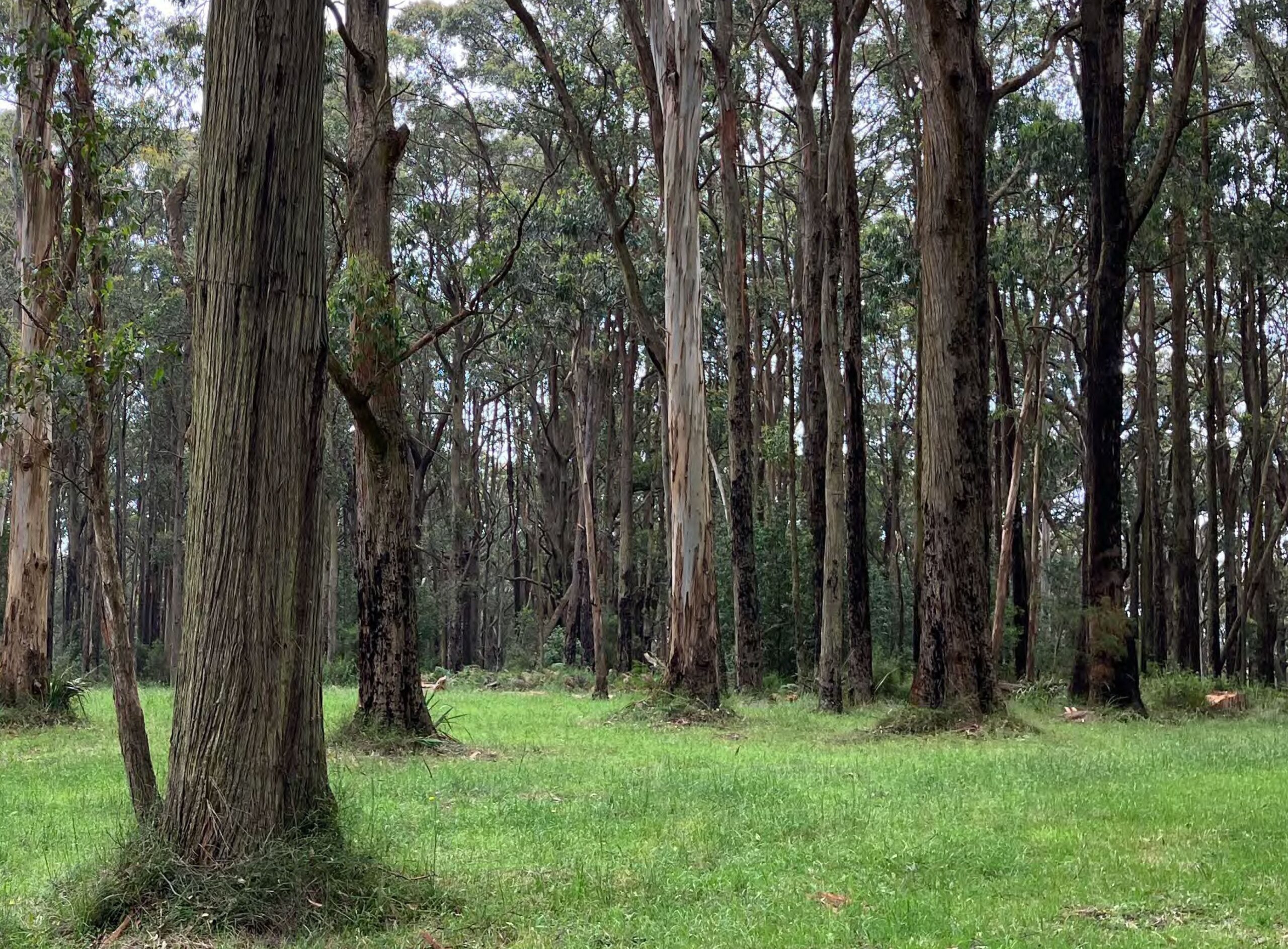
Resilience Node
The ngurrak barring Architectural Nodes are collaborative explorations of the themes of the walk through an Indigenous lens, crafted by First Peoples design studios, Djinjama and COLA Studio.
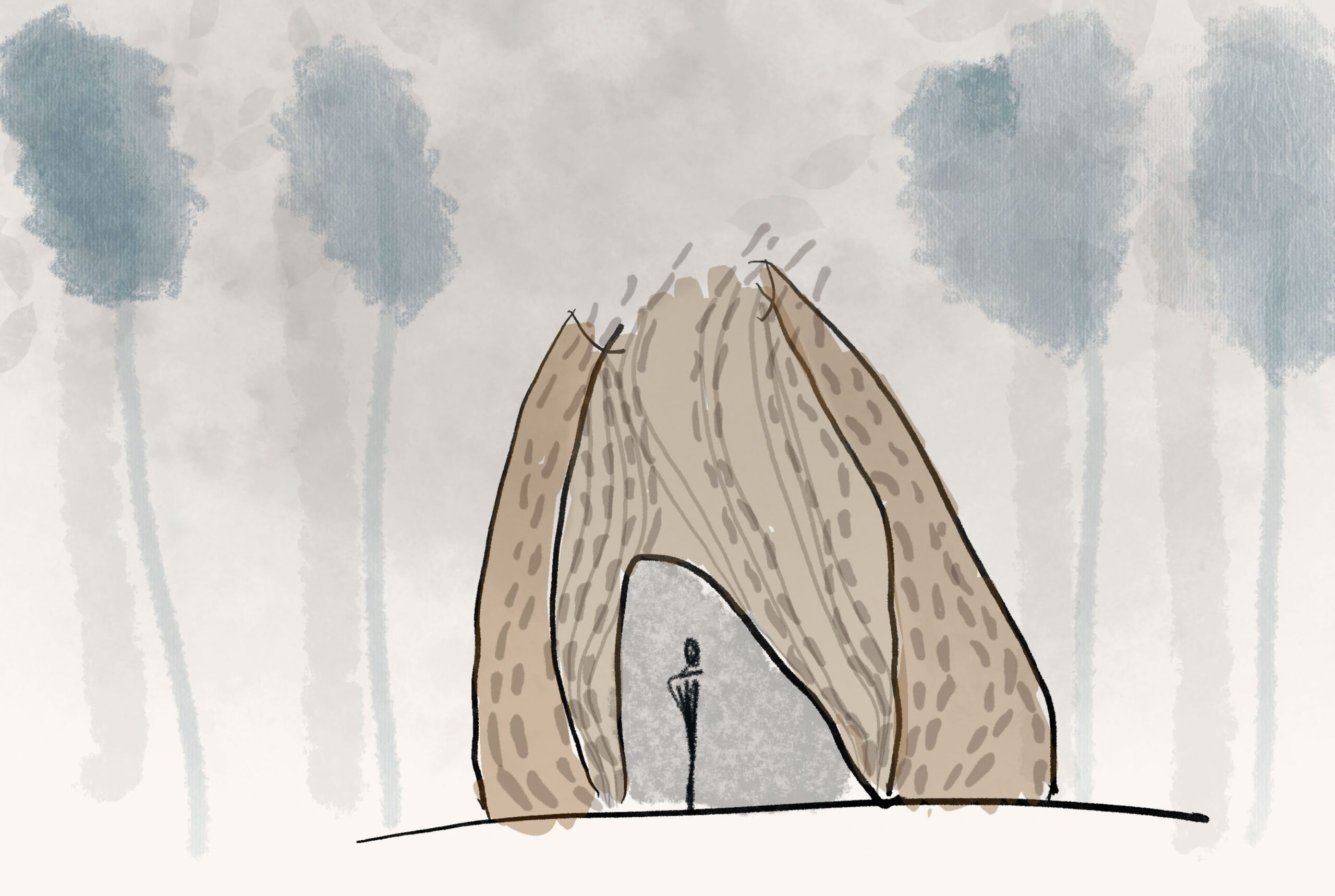
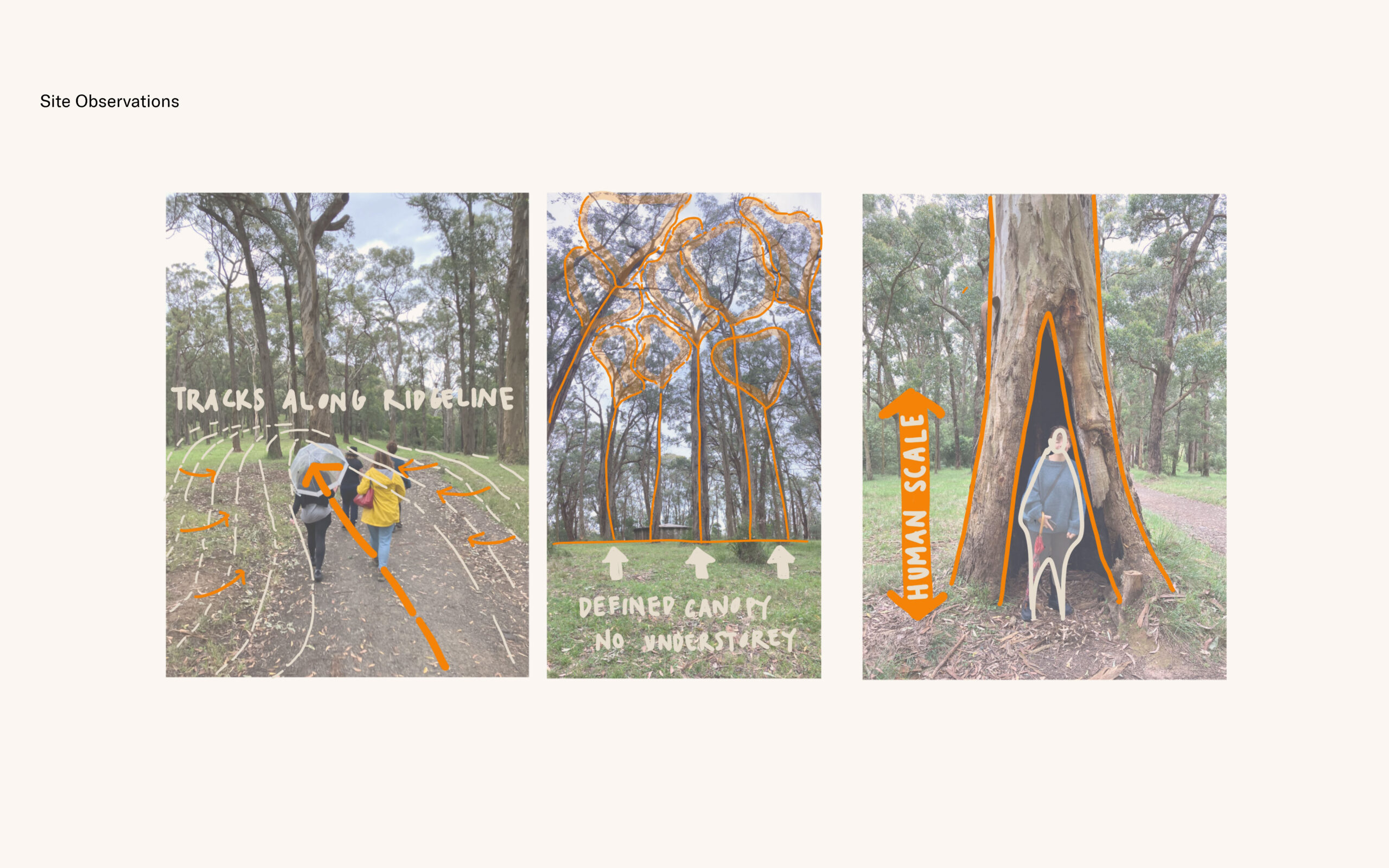
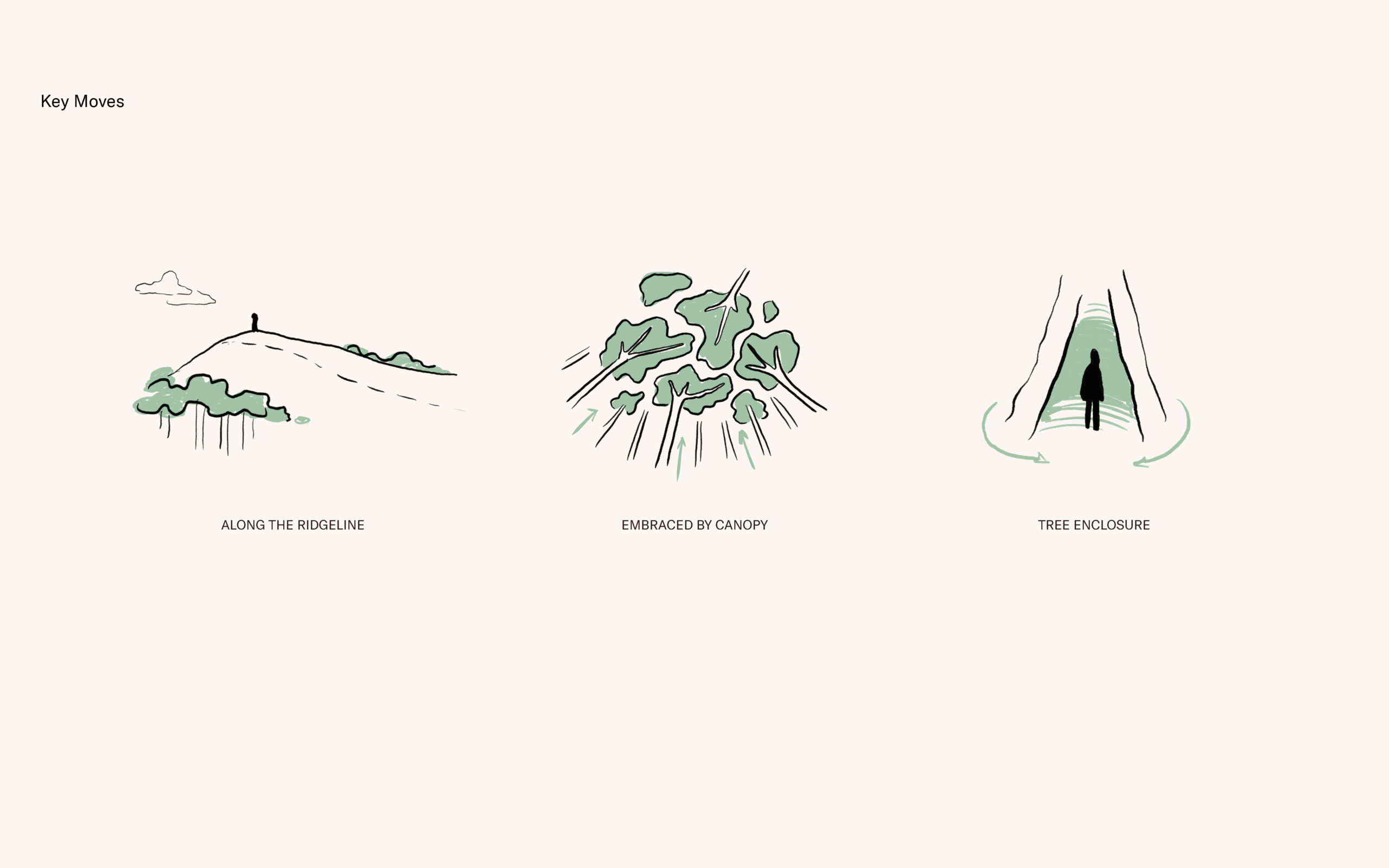
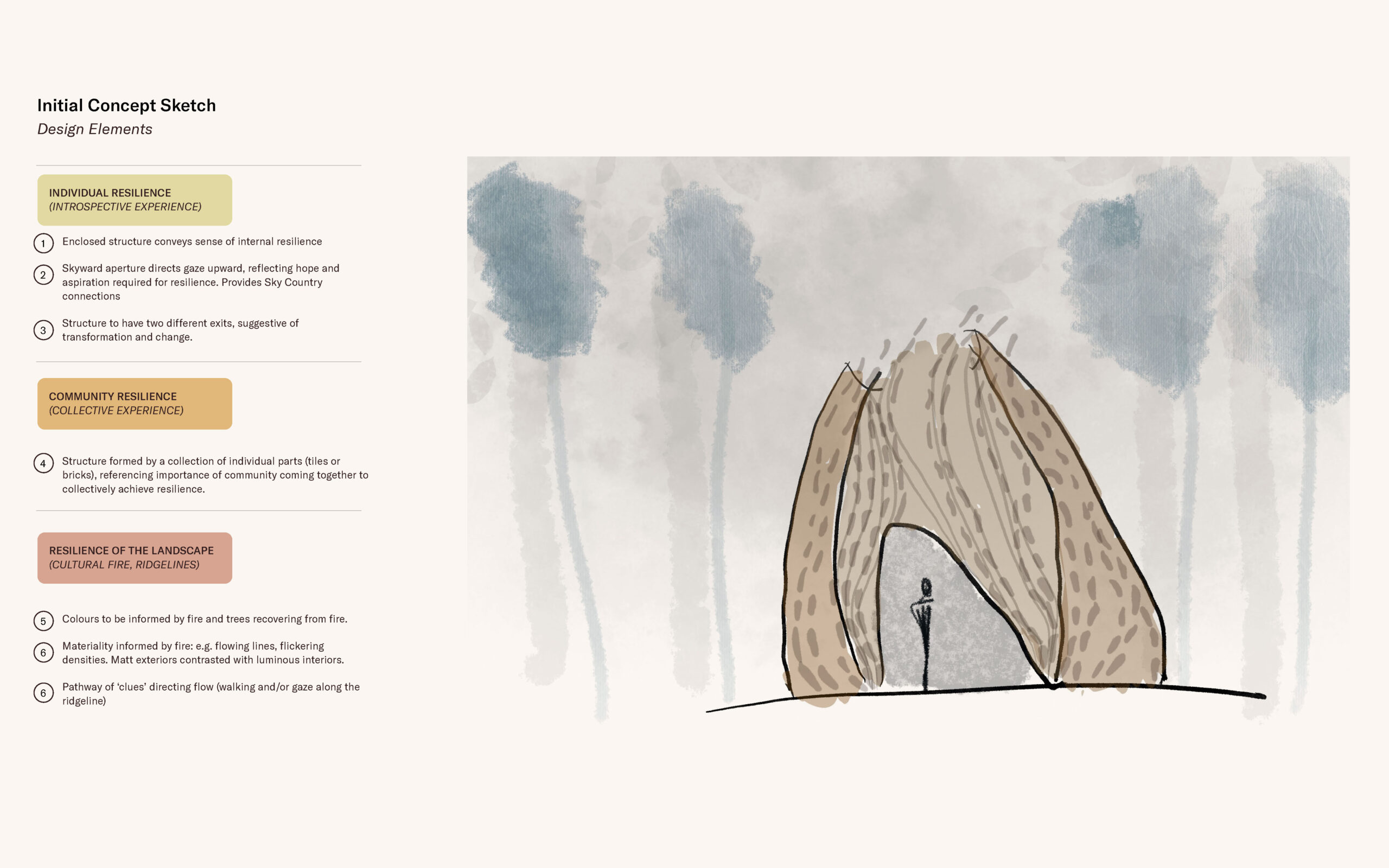
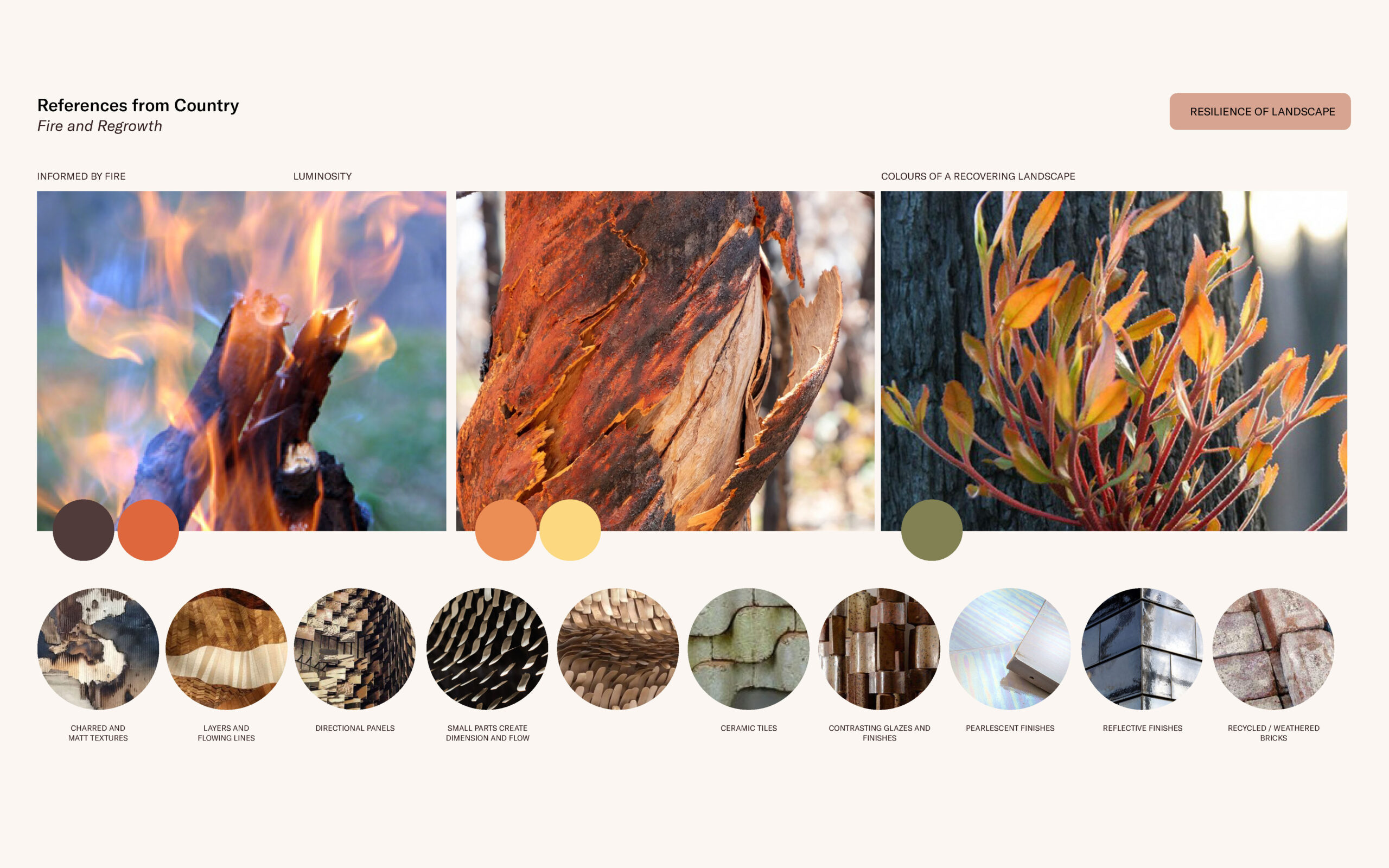
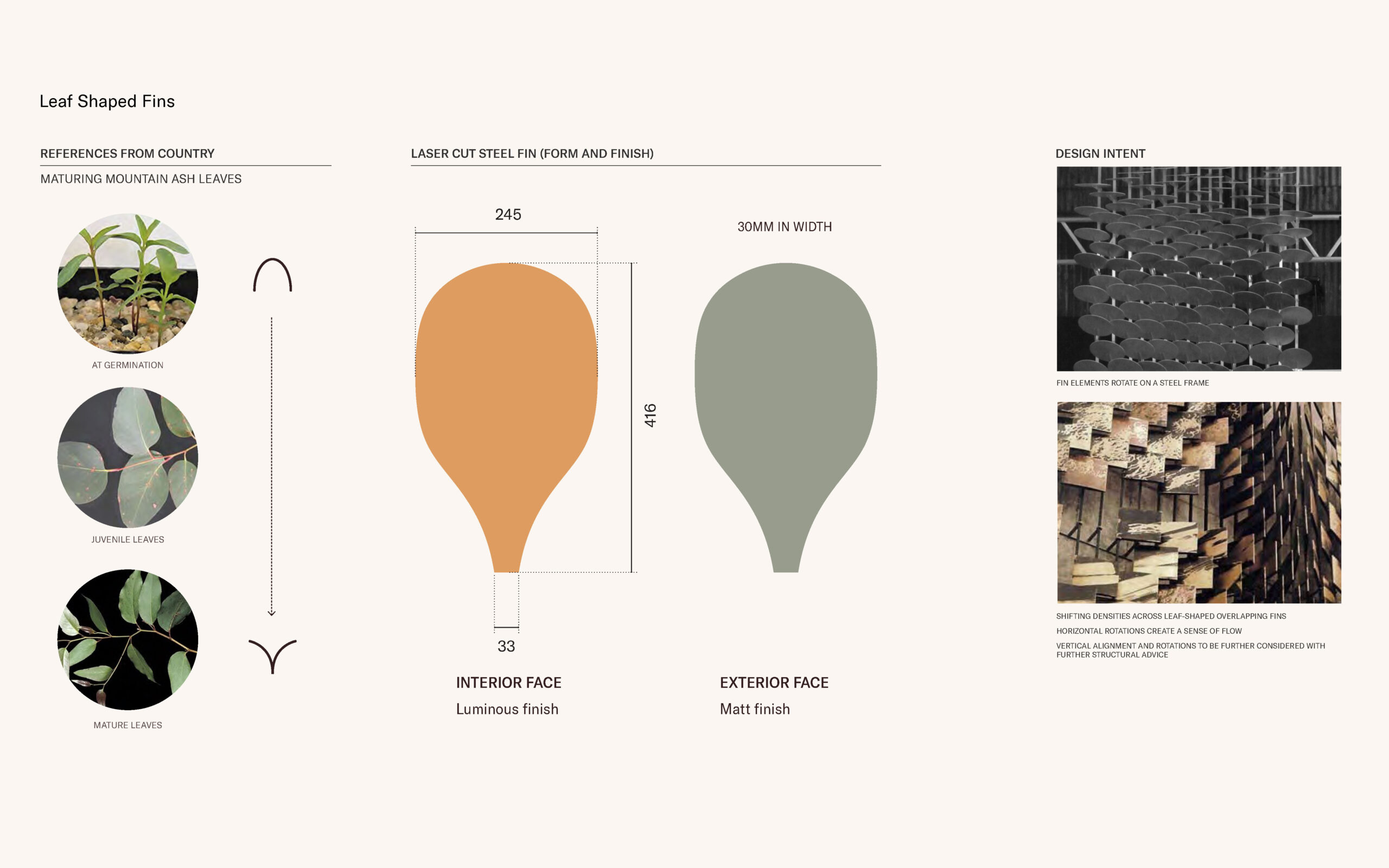
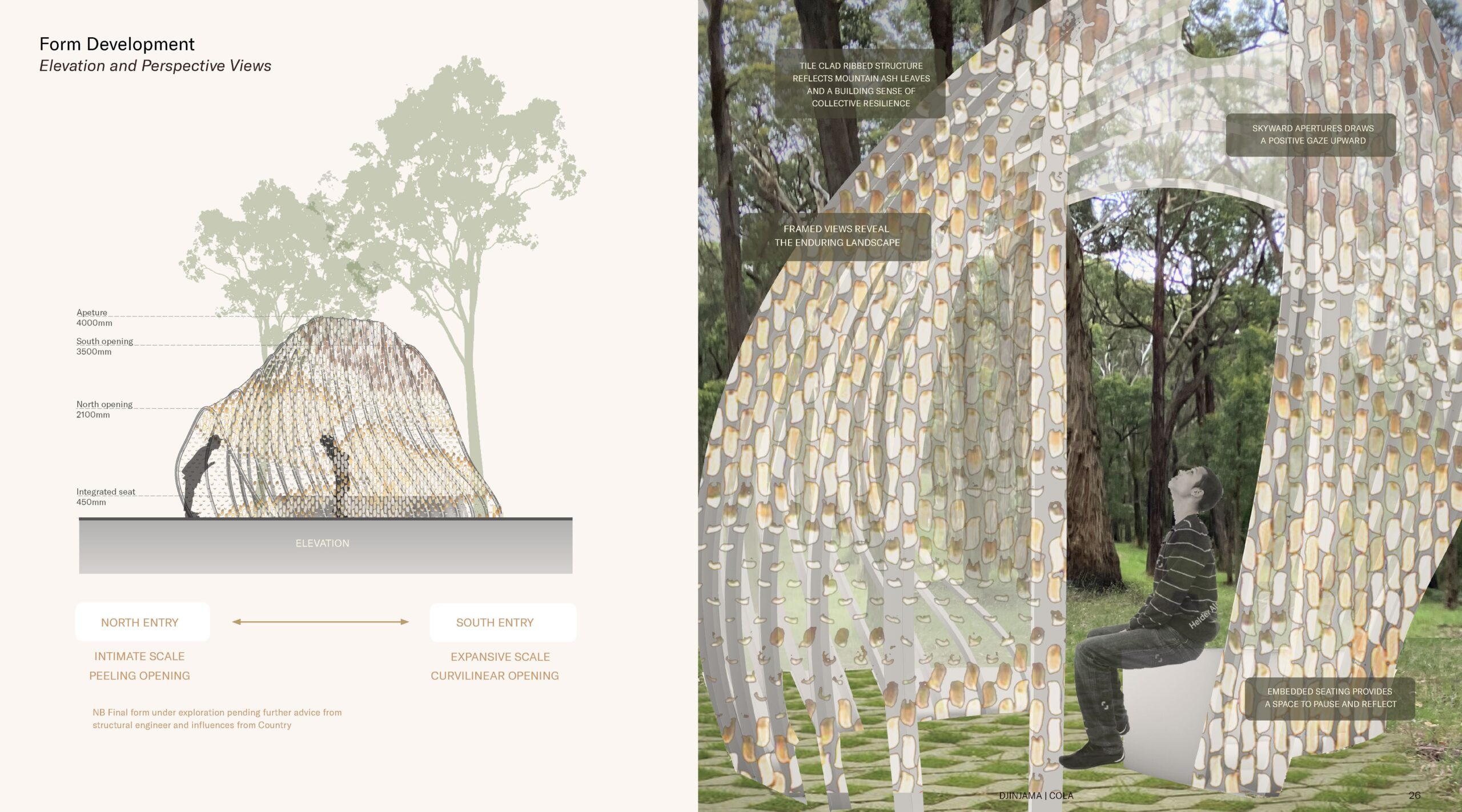
Resilience is a liminal journey through which Country/Culture/People are tempered through adversity to emerge strengthened. The form expresses the flowing tongues of cultural fire that shape the landscape; covered by the sweeping pattern of fins symbolising the strength of the community coming together. The internal experience symbolises the journey of individual resilience transitioning from a compressed entry to an expansive opening. The central aperture directs views upwards to the beyond human scale of the embracing canopy, reflecting hope and aspiration required for resilience. Responding to three layers of Wurundjeri Country – Biik-dui (On Country) Murnmut Biik (Wind Country) and Wurru wurru Biik (Sky Country) – this Node respects and acknowledges the significance of the ridgelines and waterways as guiding lines through Country.
– Design statement
The Resilience Node is located on Ramu Avenue, Tremont (near One Tree Hill Picnic Ground)
IMAGE:
Djinjama and COLA Studio
Resilience Node Initial Concept Sketch
An invitation to engage with the Node
- From inside the Node, what can you see when you look up toward the sky?
- Look at the structure – can you tell what inspired the design of the tiles?
- Look to your surroundings, what do you see flourishing here in the future?
Resilience Node: Concept and Design Elements
Djinjama and COLA Studio ICIP statement
We aim to work respectfully with all peoples and to protect the rights of Country and all entities of Country. While this work is the copyright of Djinjama and COLA Studio, it is important to note that any Indigenous Cultural Intellectual Property (ICIP) rights remain with those Indigenous peoples or groups from whom it originates. ICIP refers to Indigenous people’s heritage and culture (where heritage includes all aspects of cultural practices, traditional knowledge, and resources and knowledge systems developed by Indigenous people as part of their Indigenous identity) and is collective in that ICIP originates from a clan group and is passed on from generation to generation.
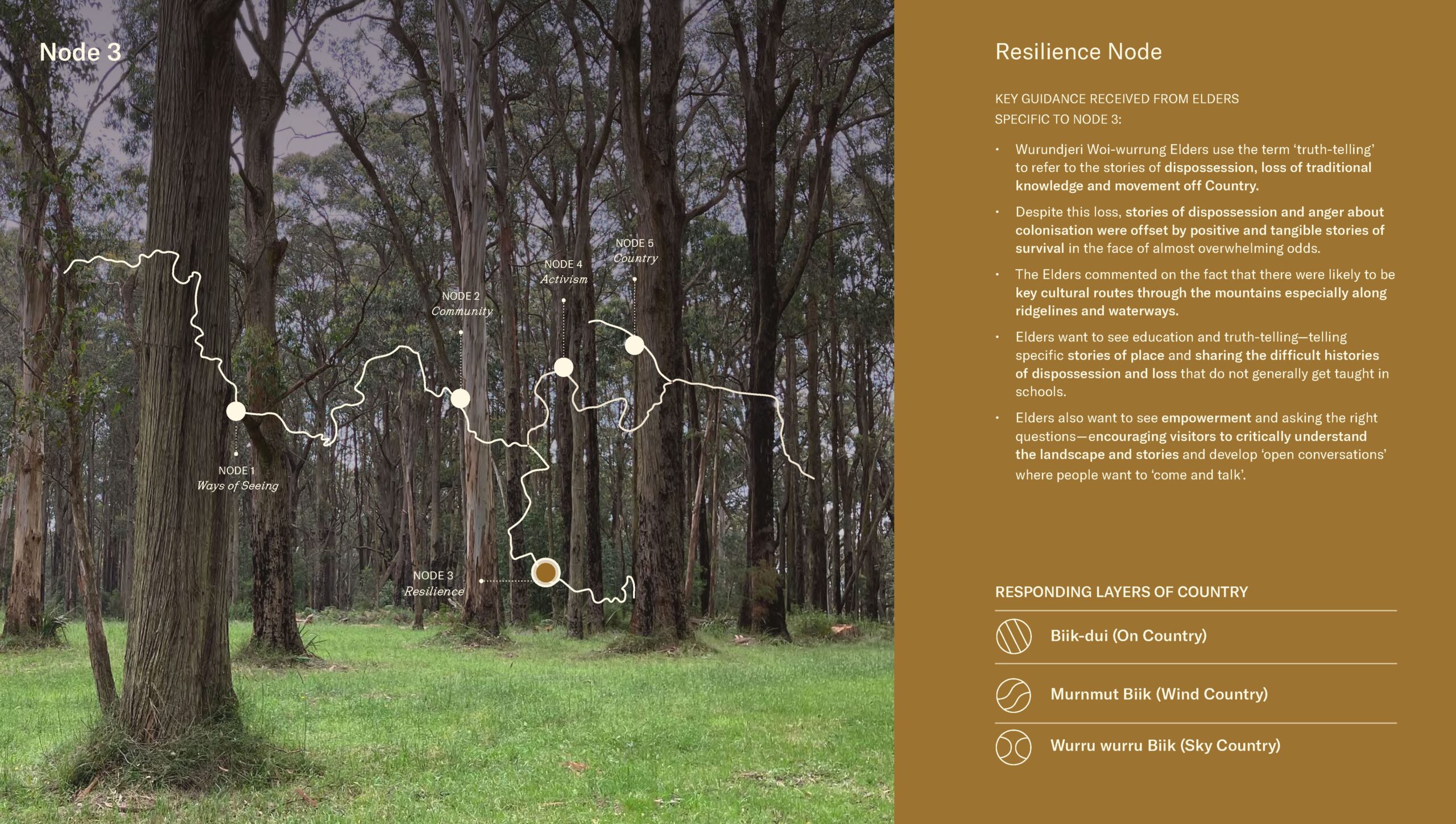
Trail Conditions and Closures
Resilience trails connect Ferny Creek, Tremont and Upper Ferntree Gully.
Whenever you’re visiting our national parks and state forests, please always check changes to trail conditions, and weather warnings, before beginning your walk. Be sure to take enough water and wear suitable clothing for the conditions.