The work of William Barak
Interpretive signage along the Ways of Seeing theme
The Work of William Barak
“ngargak mamanalin biiku
yarra mamanalik biiku
ngayabanhan yanaduwi mamanalik biiku
ngaya ngurrakik murrayuth”
“You got to know your father’s Country. Yarra is my father’s Country. Me no leave it, Yarra, my father’s Country. There’s no mountains for me on the Murray.”
– William Barak, Wurundjeri ngurungaeta
woiwurrung translations by Wurundjeri woman Brooke Wandin.
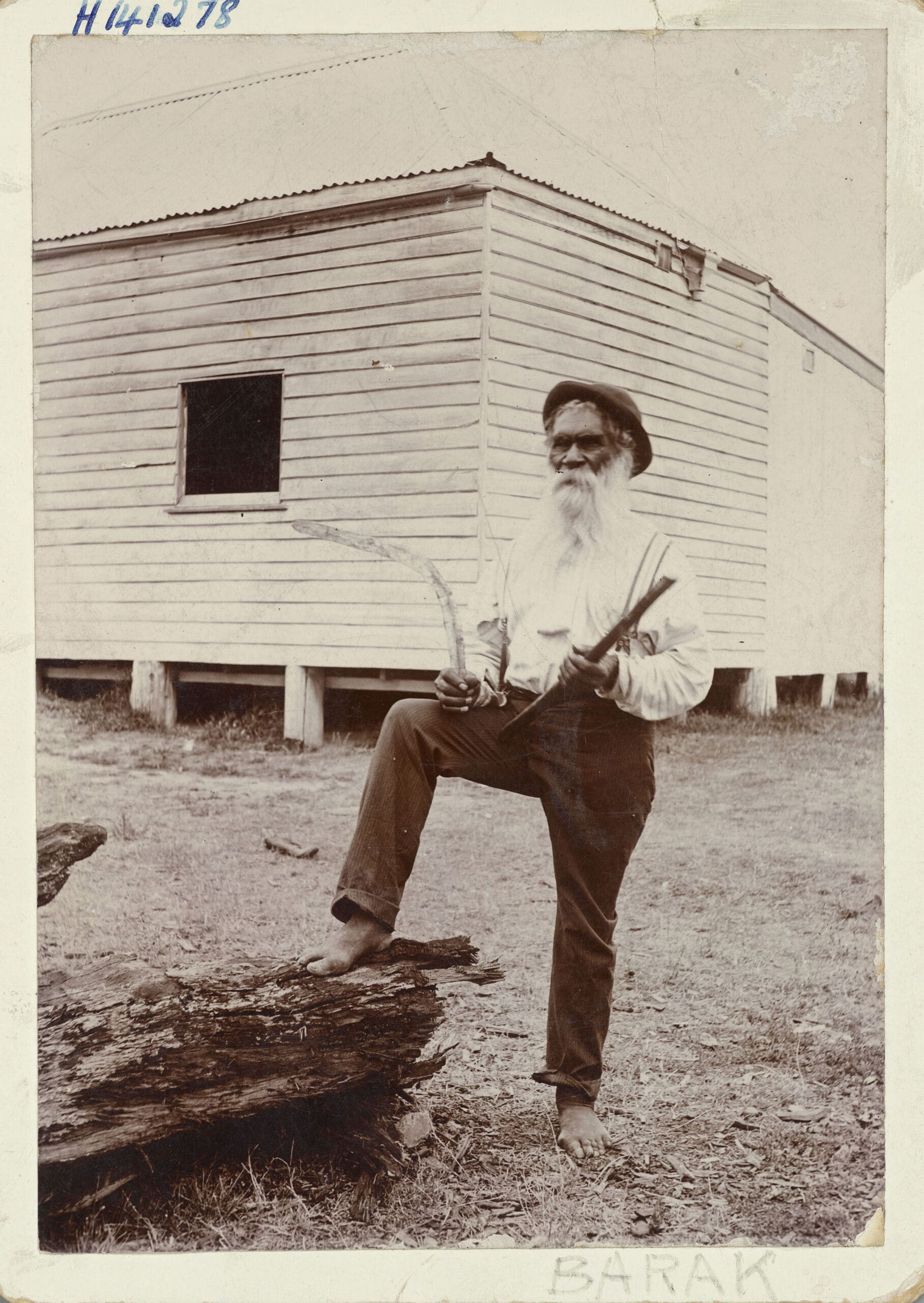
Born in 1823 in the area now known as Croydon, Barak (or Beruk) was the son of prominent Wurundjeri woiwurrung ngurungaeta (headman) Bebejan. Barak became ngurungaeta in 1874, and he spent the second half of his life living at Coranderrk Aboriginal Station in Healesville. He was an influential advocate for Aboriginal rights, and an inspiring spokesperson and leader of his people.
Barak was also a skilled storyteller and artist. He used art to express his identity and connection to Country, and to record his cultural knowledge. Using ochre and charcoal, as well as pencil, watercolour and gouache, Barak created paintings and drawings that are now held in significant collections around Victoria. They are a precious record of Wurundjeri woiwurrung Culture and ways of life, depicting traditional clothing, animal totems, hunting, and cultural ceremonies, including corroborees, which were held regularly on Country during his lifetime. Embedded with the spirit of Culture and Country, Barak’s artworks are a lasting legacy for generations of Wurundjeri woiwurrung people.